Start with the map, not the list
Normandy begins barely an hour west of Paris, which is why it is the most popular day trip out of the capital. It is also why it is so often badly planned. The region is large, and its best-known places sit at the opposite ends of it: Étretat on the chalk cliffs north of the Seine estuary, the D-Day beaches in Calvados, and Mont-Saint-Michel on the Breton border.
The honest driving times from central Paris, outside rush hour: Giverny about 1h15, Deauville and Honfleur about 2h15, Étretat about 2h30, the landing beaches around Omaha about 3h, and Mont-Saint-Michel about 4h. Every one of those figures doubles as time spent in the car on the way back.
The rule that follows is simple: one coast per day. Pick the part of Normandy that matters to you and give it the hours. A day that tries to combine Étretat with the beaches, or the beaches with Mont-Saint-Michel, is a day spent on the motorway with short stops in between.
Étretat and the Alabaster Coast
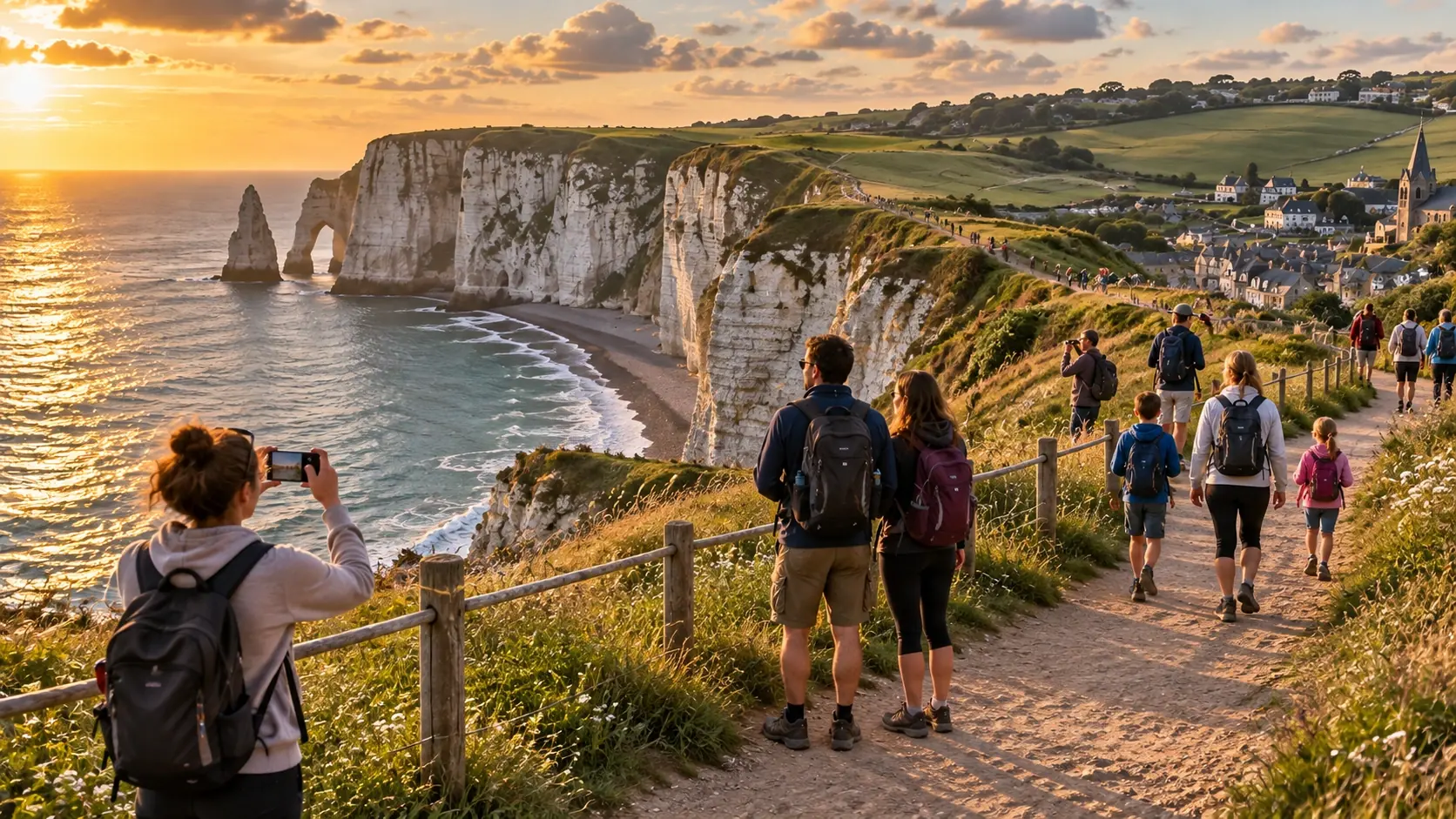
Étretat is the Normandy of paintings: white cliffs, the Porte d’Aval arch and the Aiguille, the needle of rock standing in the sea beside it. Monet painted it dozens of times, and it remains one of the most photographed places in France.
The visit is a walk rather than a museum. The path up the Falaise d’Aval, to the west of the beach, gives the classic view in about twenty minutes, and continues along the clifftop towards the Manneporte for those who want more. On the other side of the bay, the chapel on the Falaise d’Amont looks back over the whole scene. Good shoes matter more than anything else you bring.
The town is small and its car parks fill before 11:00 on summer weekends. This is where a chauffeur changes the day most visibly: you are dropped at the promenade, and the car waits outside the town until you call.
Étretat pairs naturally with Honfleur, about fifty minutes away across the Pont de Normandie. Cliffs in the morning light, lunch and the harbour in the afternoon: that is the most satisfying single day the region offers.
Honfleur and Deauville
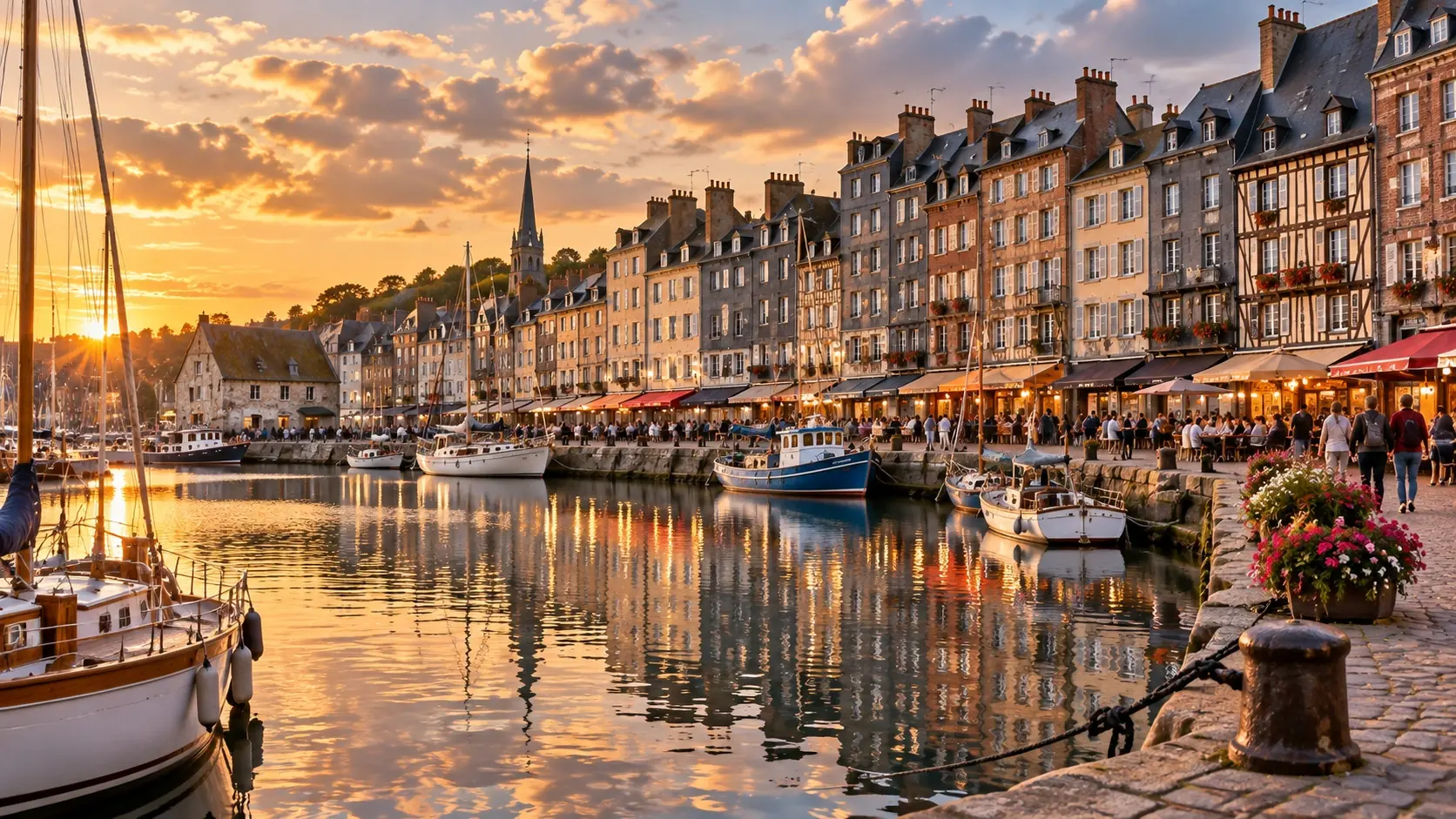
Honfleur is the old port the Impressionists came for: tall slate-fronted houses around the Vieux Bassin, and the church of Sainte-Catherine, built of wood by shipwrights in the fifteenth century. It is best seen slowly and early, before the day visitors arrive around midday.
Deauville, fifteen minutes along the coast, is the other face of Normandy: the Planches boardwalk with its coloured parasols, the racecourse, the casino and the Parisian weekend crowd. Trouville, just across the river, has the fish market and the livelier brasseries.
Together they make an easy, unhurried day at 2h15 from Paris, and the one we recommend for a first visit to Normandy. Our Deauville and Honfleur journey is built around exactly that pairing.
The D-Day beaches
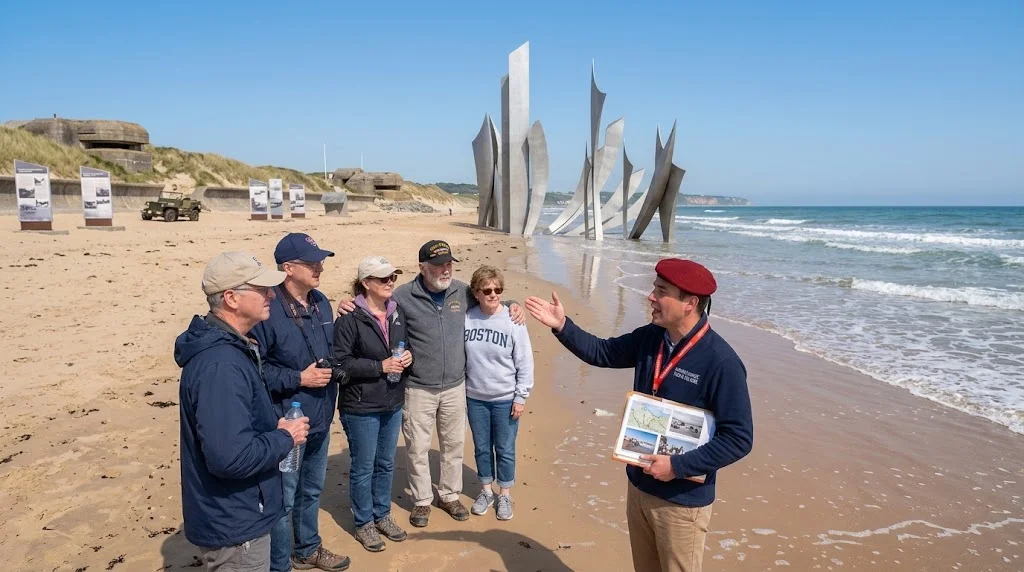
The landing beaches are a different kind of trip, and deserve to be treated as one. Around three hours from Paris, the essential sites of the American sector sit within a few kilometres of each other: Omaha Beach, the cratered headland of Pointe du Hoc, and the Normandy American Cemetery at Colleville-sur-Mer.
The cemetery closes at 17:00, and the day should be built backwards from that time. Visitors from the United Kingdom and Canada are often better served by the eastern sector instead: Gold, Juno and Sword beaches, the Mulberry harbour at Arromanches and Pegasus Bridge. Trying to cover all five beaches in a single day is the most common mistake: choose a sector.
A licensed battlefield guide makes a greater difference here than anywhere else in Normandy. The landscape is quiet now, and it takes someone who knows the ground to make it speak. Our Normandy D-Day journey includes one on request.
Mont-Saint-Michel: a day, or a night?
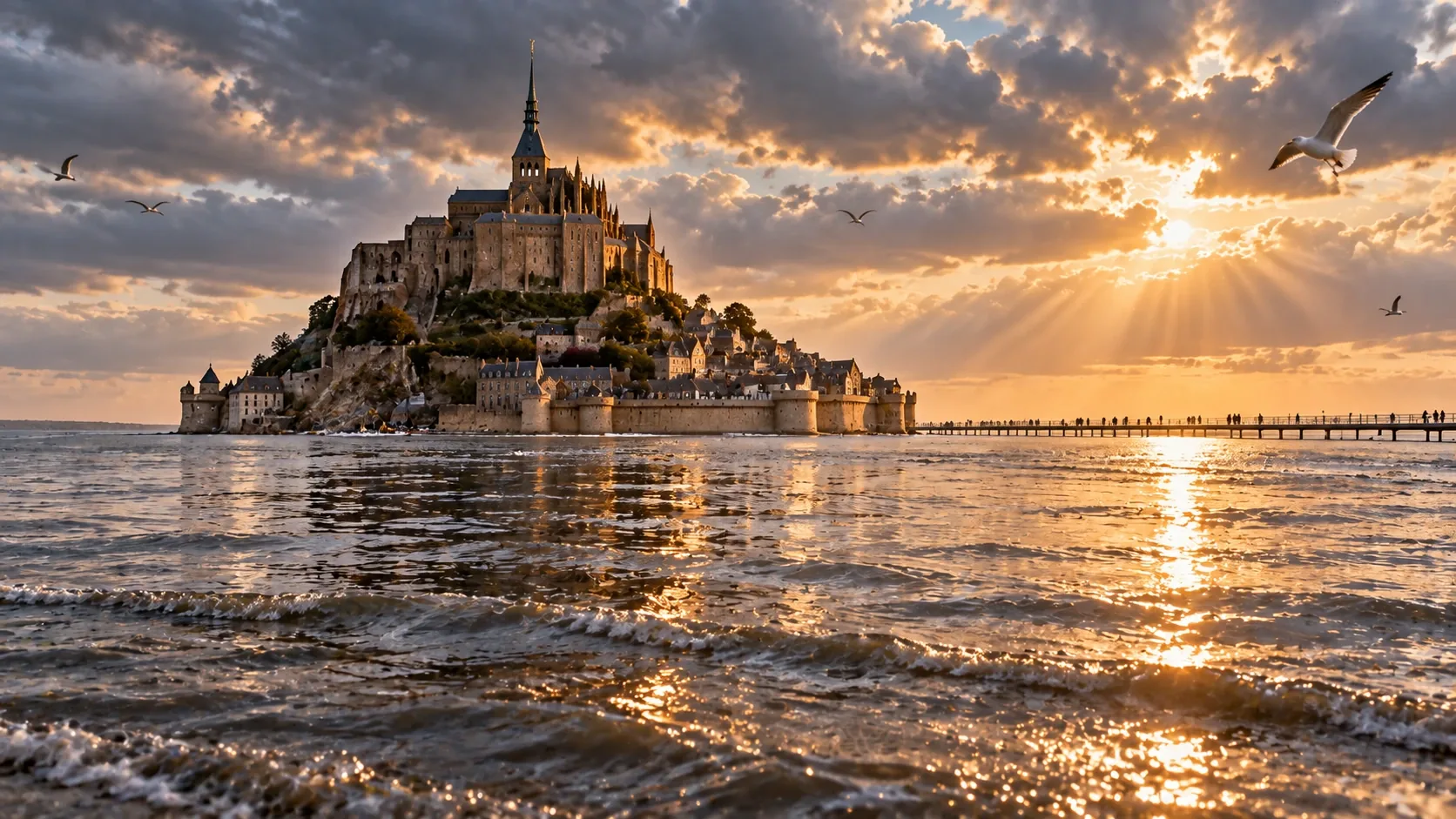
Mont-Saint-Michel is technically in Normandy and practically in a category of its own. At four hours from Paris each way, a day trip means leaving at 7:00 and returning after 21:00. It is possible, and we do it often, but it is worth knowing what you are signing up for.
Cars do not drive to the mount itself. Visitors park on the mainland and cross the last two and a half kilometres by free shuttle or on foot along the causeway. The visit is then a steep climb through the village to the abbey. Timing the arrival around the tide, high water for the island view or low water for the walk across the bay, is what separates a good visit from a crowded one.
If the calendar allows, stay the night. The mount after the last coach leaves is a different place, and the drive home the next morning can take in the D-Day beaches or Honfleur on the way. Our Mont-Saint-Michel journey works either way.
Making the day work
Leave early. The A13 out of Paris is the only sensible road west, and it clogs from 8:00 on weekdays. A 7:30 departure puts you on the coast by 10:00, ahead of the crowds and the car parks filling.
Mind the return. Sunday evening from May to September is the worst time to drive back towards Paris, with the whole of the capital’s weekend traffic on the same motorway. A Saturday or weekday trip is noticeably calmer.
Add Giverny on the way. Monet’s house and gardens sit just off the A13, an hour from Paris, and open from spring to early November. They add about two hours to the day and fit naturally before Étretat or Honfleur. See our Giverny journey.
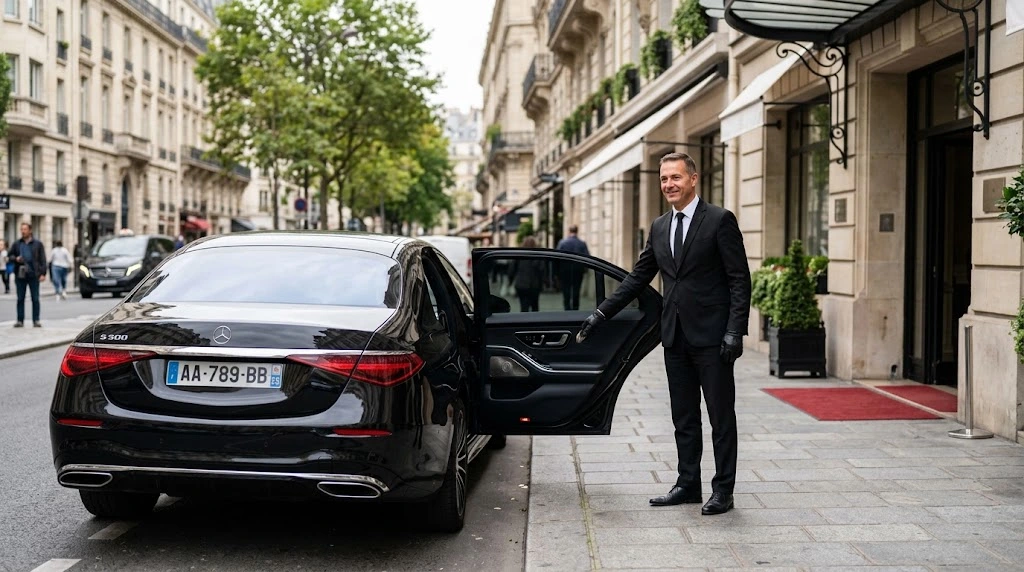
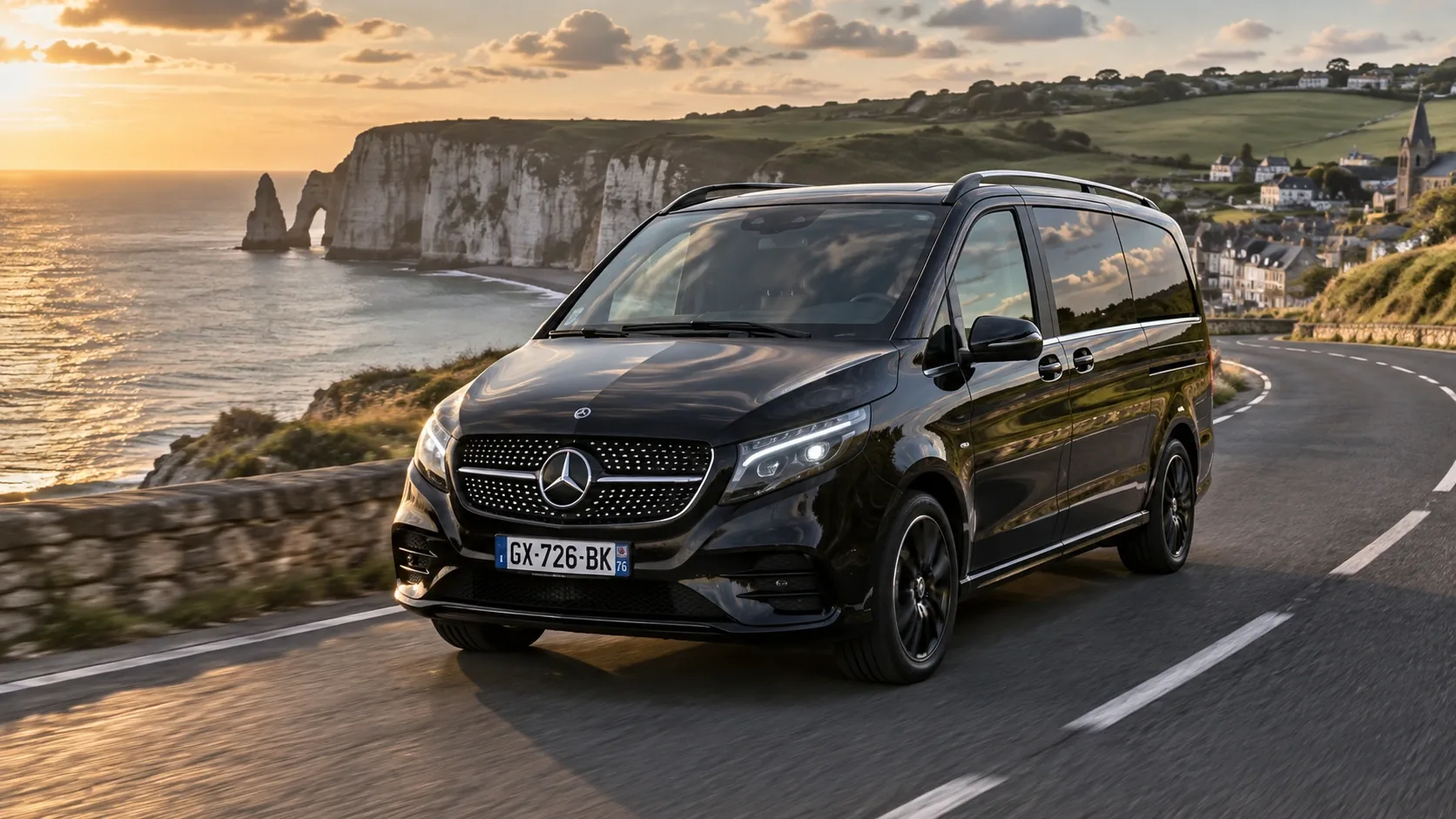
Choose the car for the hours, not the distance. Five or six hours in a car is a long time. For two people, a Mercedes S-Class turns the motorway into rest. For a family, a V-Class gives everyone room and space for boots, coats and whatever gets bought in Honfleur.