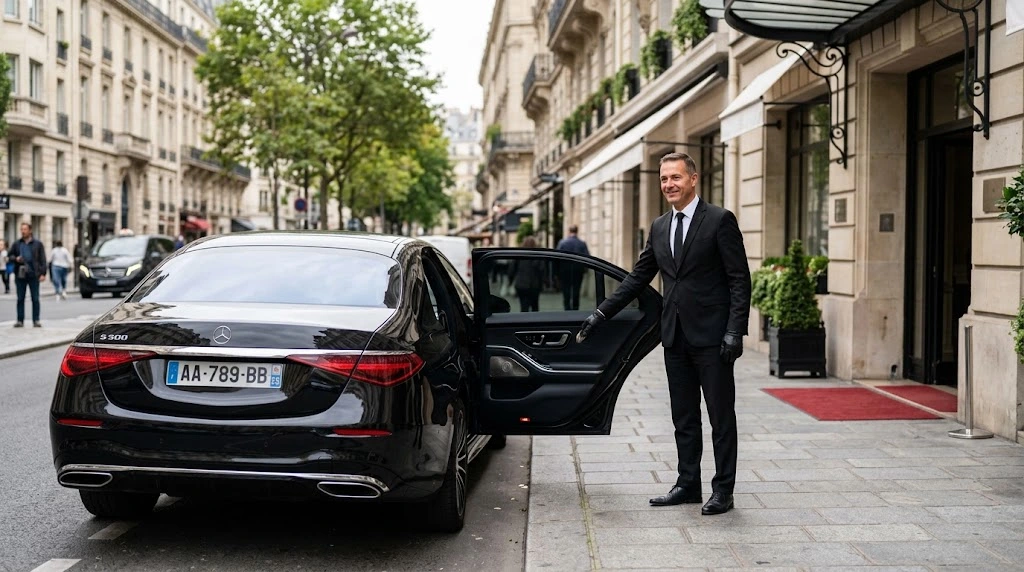
The short answer
No, you are not expected to tip a private chauffeur in France. A gratuity is voluntary by law, and no profession is allowed to require one. Nobody will be offended, and nobody will be waiting.
This surprises visitors from the United States in particular, where a chauffeur’s income genuinely depends on gratuity. In France it does not. Your chauffeur is paid a salary, and the fare you agreed already covers their time, their waiting, the tolls and the fuel.
One point worth correcting, because it is repeated everywhere: the famous service compris rule is a restaurant rule. A 1987 decree requires establishments serving food at tables to display prices with service included. It does not govern transport. For a chauffeur, the position is simpler still — the quoted fare is the whole price, and anything beyond it is a gift.
Why a private transfer differs from a taxi
With a taxi, the fare is metered and the relationship ends at the kerb. With a pre-booked private transfer, the price was quoted, agreed and often paid in advance, and it accounts for things a meter never sees: the hour spent waiting for a delayed flight, the chauffeur arriving forty minutes early to be sure of the terminal, the cleaning of the car before you got in.
That is why the question of a tip rarely arises in practice. There is no moment of payment at the end of the journey where it would naturally come up.
The conventions differ by service, and they are worth knowing if you are moving around Paris by several means:

Chauffeur, taxi, ride-hailing: the conventions
Private chauffeur. Nothing expected. If the day warranted it, a round figure in cash at the end, handed over directly.
Licensed taxi. The common habit is simply to round the metered fare up — €22 for a €19.50 ride, and keep the change. Effortless, frequent, and warmly received.
Ride-hailing. The apps offer a tip after the ride. Most passengers in France skip it without a second thought. If the driver was genuinely helpful with bags or a difficult address, a small amount is a decent gesture.
None of these is a rule. They are habits, and habits vary by person.
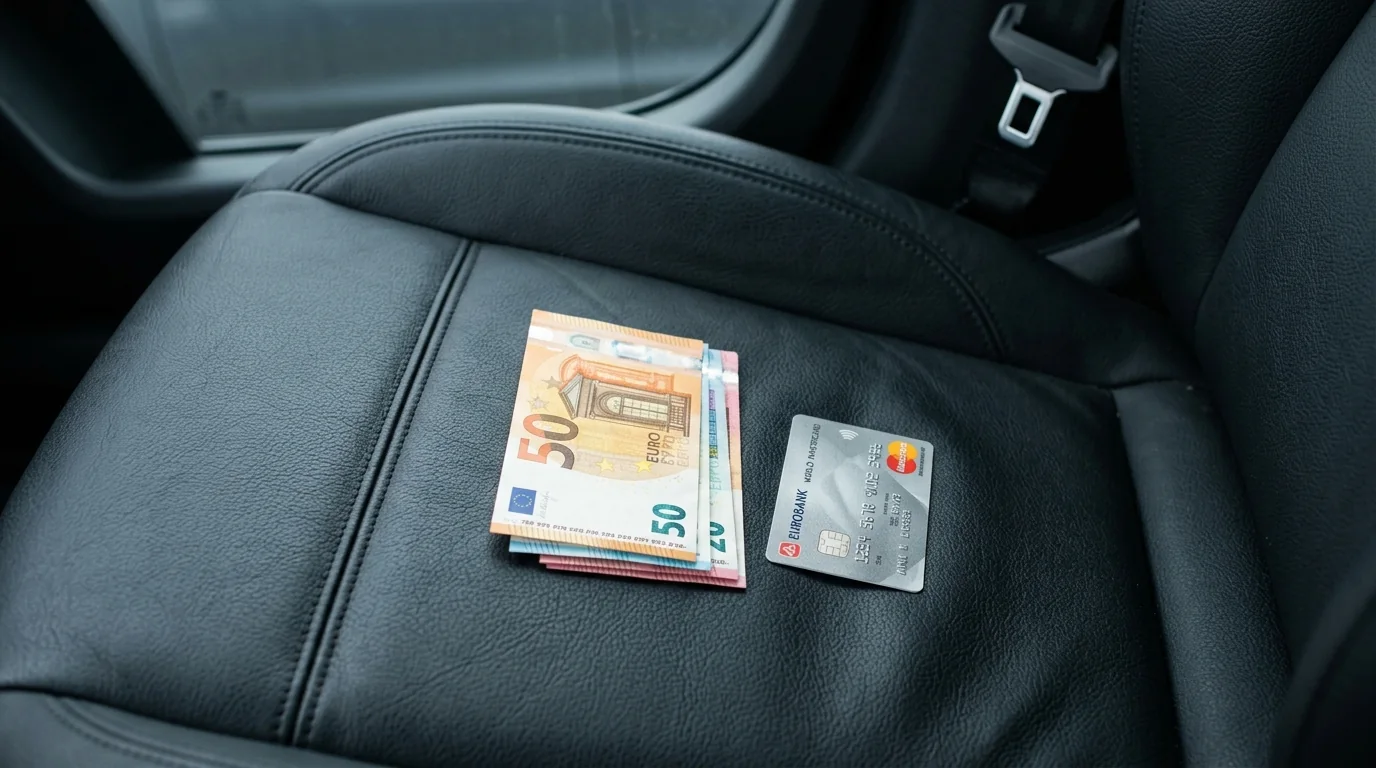
If you want to give something anyway
You are entirely free to, and it is received as it is meant. There is no percentage to respect. If you feel the day deserved it, 5 to 10 % of the fare is generous and will never be read as either stingy or excessive. On a long day with many stops, a round figure is the usual form.
Cash, and directly. Hand it to the chauffeur at the end of the journey. Do not add it to an invoice: it will disappear into accounting and never reach the person who drove you. Card tipping exists on some terminals but is inconsistent, and a chauffeur may simply have no way to accept it.
The practical version: keep a €10 or €20 note in your wallet for the week. It removes any awkwardness at the end of a journey, and costs nothing if you never use it.

The days that genuinely warrant it
Some journeys ask more of a chauffeur than others, and those are the ones where a gesture makes sense. A five in the morning departure for an early flight. A midnight arrival at Charles de Gaulle after a delayed connection, where the car waited three hours without a word. Four hold cases and a pushchair loaded and unloaded in the rain.
The same applies to a long day held by the hour, where the programme changed twice and the chauffeur rebuilt the route each time without being asked.
If you travel to Paris regularly, you will end up with a chauffeur you know. Tipping consistently in that relationship is less about the money than about the fact that you noticed.

What is actually worth more
A written word to the company. A chauffeur who is named in a message to us has something that outlasts a note in a pocket: it reaches their file, their manager and their next assignment.
It costs nothing and it carries further. If you want to say that someone did their job exceptionally well, tell us — we pass it on, and it counts.